

February begins with a positive balance in the markets, a welcome for President Warsh
The nomination of Kevin Warsh as the new candidate for Federal Reserve (Fed) chairman triggered significant volatility across all assets, with gold registering its biggest daily drop since 1983 (though it has partially recovered) and silver experiencing its biggest fall since 1980. The gravity of the situation in the financial markets is real.
The dollar responded with its strongest day since May as emerging market assets experienced sharp reversals in their stock and currency prices after gains in previous days.
Despite the turbulence, markets continue to price in two rate cuts by 2026, although Warsh’s aggressive stance on the Fed’s balance sheet raises questions about how restrictive future monetary policy might be (he has criticized the use of quantitative easing in the past). Warsh appears to be a staunch defender of the independence of the US central bank, a far from simple matter with Trump lurking, although I believe he will lean towards a more accommodative approach and ultimately lower rates (a weaker labor market will make it easier for him to do so), which should favor the performance of risk assets , especially equities, on both sides of the Atlantic.
The economic cycle reinforces its growth
No one doubts that the global economic cycle is showing signs of improvement : recent data point to an incipient recovery in the global manufacturing sector, with a strong increase in the ISM manufacturing confidence index in the US, a surprisingly strong fourth-quarter GDP for the eurozone at 1.4% year-on-year, and business confidence data in Asia continuing to improve in January. Furthermore, the investment cycle in Artificial Intelligence (AI) and fiscal stimulus, particularly evident in Germany where infrastructure spending is accelerating, are providing additional support for the recovery in global growth.
Good business results and, as expected, rotation between sectors
While not as brilliant as some had hoped, the corporate earnings season for the fourth quarter of 2025 in the US and Europe is proving quite positive. Meta’s (Facebook’s) report is particularly noteworthy , boosting its stock price by more than 10% thanks to results showing that AI is driving advertising revenue growth.
Amazon , for its part, announced it will allocate $200 billion to data center infrastructure, chips, and equipment, encompassing not only AI-related projects but also other areas such as its aerospace division and robotics applied to logistics. The new technological era continues. If we add up the planned investments for this year by the five main «hyperscalers» —Meta, Amazon, Alphabet, Microsoft, and Oracle—the figure rises to $670 billion , compared to the slightly more than $500 billion estimated before the earnings reports.
Despite the above, market rotation continues, with defensive and value sectors performing better, as consumer staples and energy companies see gains, while the technology sector struggles. This rotation continued globally, with European indices like the STOXX 600 and Asian markets outperforming US markets. Indeed, the launch of new AI-based automation tools is being perceived as a threat to software companies and triggered a sharp rotation within the technology sector itself, with the US software index falling 7.8%.
The behavior of the stock markets at the beginning of this year confirms once again the maxim that I have quoted so often in this column: success in the stock market is based on diversification and long-term investment.
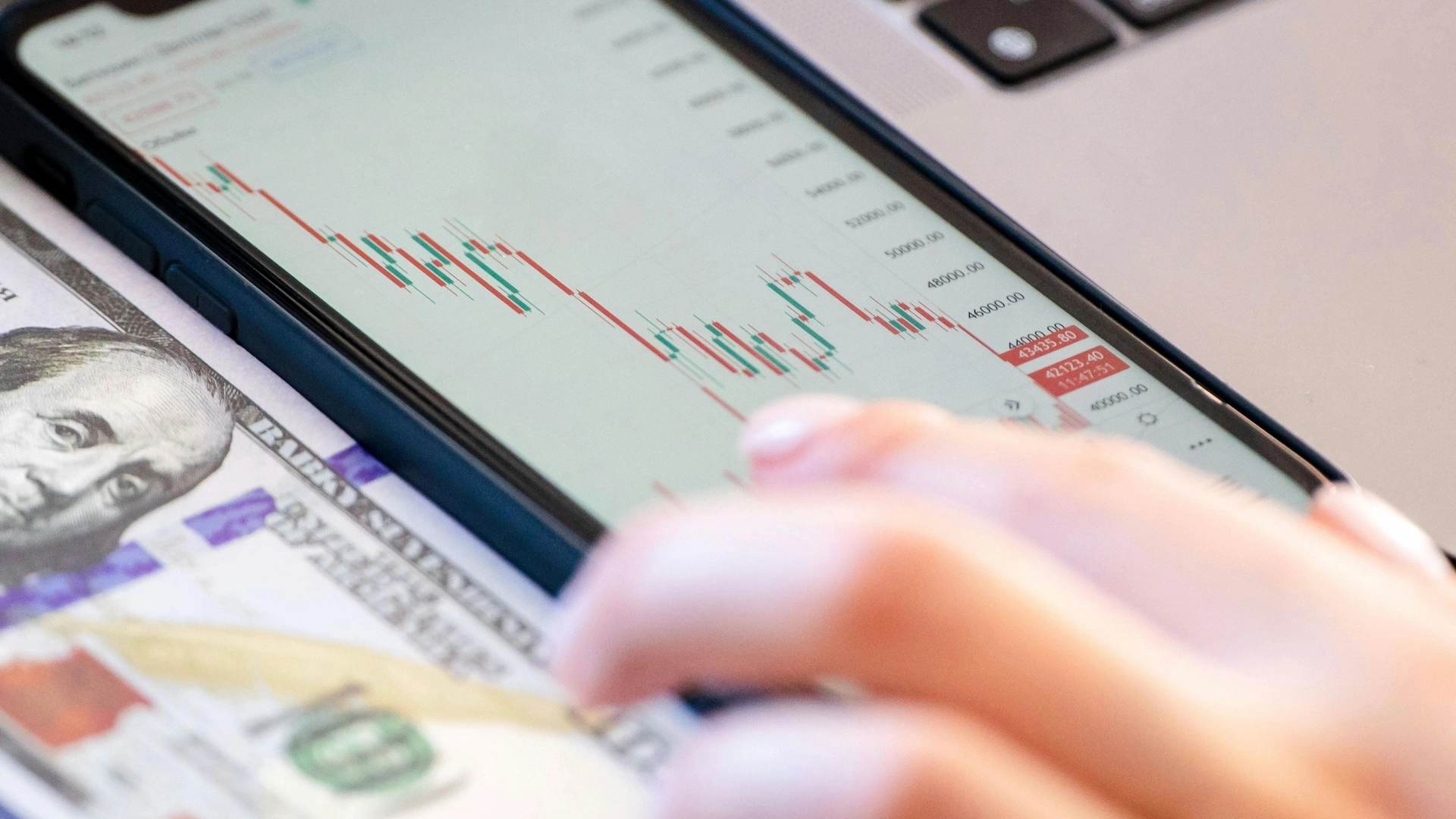
P.S. For cryptocurrency investors: Bitcoin’s decline since its last peak on October 25th has now reached -45%, similar to that of other cryptocurrencies. Such a steep drop, coupled with the collapse of some commodities, isn’t a symptom of a systemic market crisis, but it does clearly show that the reduced global liquidity driving its price is actually the key to its rise. If market liquidity decreases, the fuel that sometimes propels cryptocurrencies to new heights dwindles, and distrust in holding them grows, leaving many investors «stuck .» As if this weren’t enough, the new AI trend is absorbing a large portion of the investment seeking «the latest technology.» Cryptocurrency investment looks bleak; it seems to be turning into kryptonite.