

Effects of the midterm elections in the US on politics and stock markets
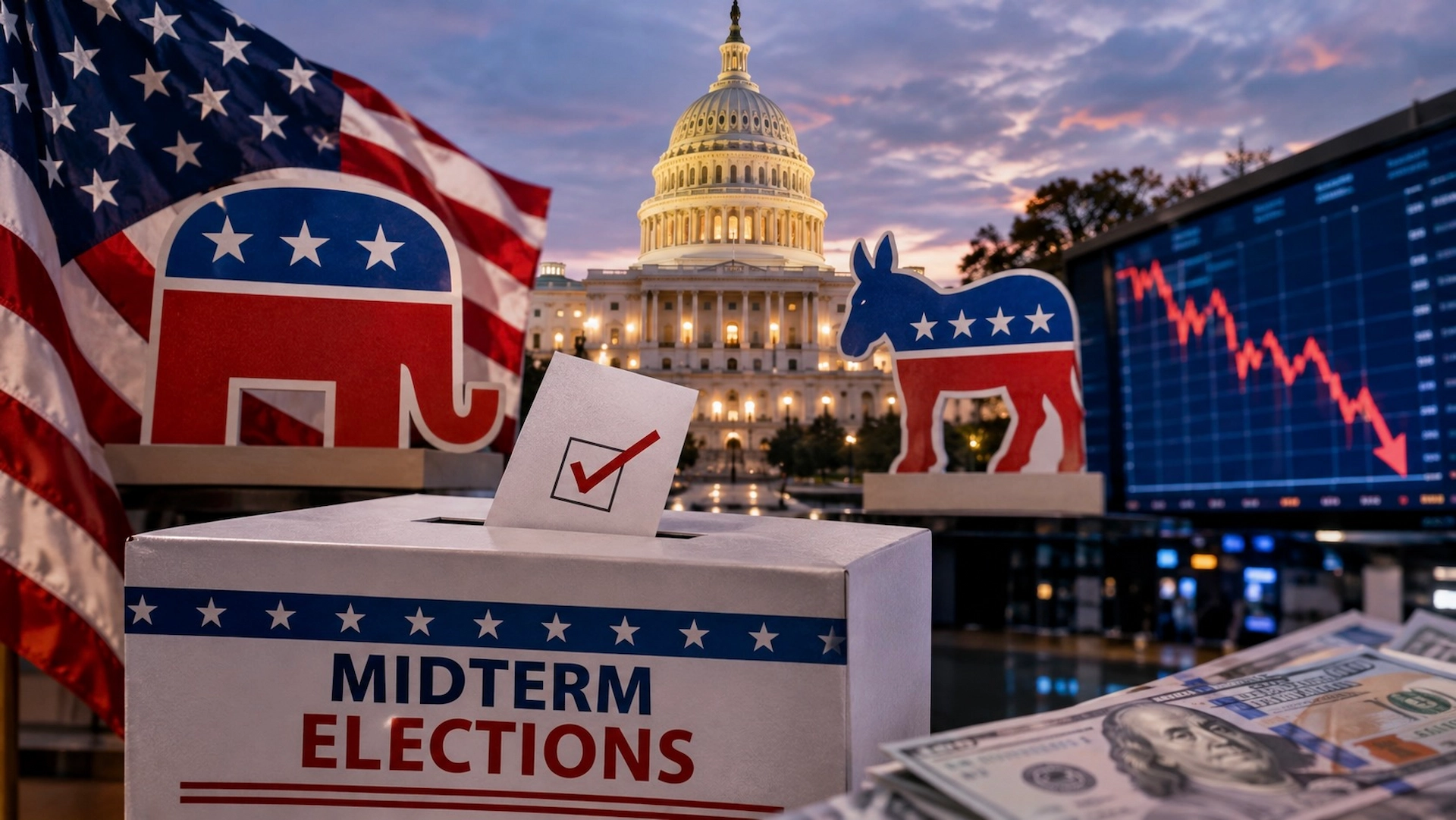
The US midterm elections are the midterm elections of American presidents and are held every four years or two years after the presidential elections. The next ones take place today, November 3
We could describe this special electoral process as one more element of the checks and balances that characterize governments in the United States because it reinforces the separation of powers. This time they will allow Americans to decide whether to maintain or change the composition of Congress during the second half of Donald Trump’s presidential term.
Voters will decide:
Who are the 435 members of the House of Representatives who are renewing their seats or not. This is the lower house, equivalent to our Congress of Deputies.
In the Senate, a third of its 100 members (in 2026, 35 seats) will be renewed (in the US senators’ terms are extended up to 6 years). As in Spain, the American Senate is a chamber that approves or blocks the bills it receives from the House of Representatives, although then, in the event of rejection, there are formulas for the president to legislate without the Senate’s acquiescence. Finally, in various States, members of their Government and numerous local offices will be elected.
For all these reasons, the relevance of this electoral process is enormous since its result will decide which political party – Trump’s Republicans or the opposition Democrats – will control Congress and how easily the president will be able to carry out his plans for the next two years.
Political effects of midterm elections
Often, these choices go unnoticed with little change. This time, if what the polls say is true, this time they can really change the balance of power in the US (go from Republicans to Democrats) at a time when Trump’s popularity is at rock bottom. The reason is understandable: the conflict in Iran continues to impoverish Americans when they go to fill up with gasoline (its price – a gallon – has broken the record for days above 4 dollars) which has triggered inflation and the debt and deficit of his administration that do not stop rising.
If the aforementioned political turn occurs, a large part of Trump’s legislative initiatives could be blocked or modified and the investigative commissions controlled, a particularly sensitive matter at the moment due to the consequences of the war in the Middle East, as well as making it difficult to approve presidential appointments, including judicial and administrative positions.
In short, today, November 3, it will be decided which political party – Trump’s Republicans or the opposition Democrats – will control Congress and how easily the president will be able to carry out his plans for the next two years, including budgets and public spending. In other words, there is no small stake, including for Europe.
Effects on financial markets
At a time of special tension in the debt markets with Treasuries reaching yields (their prices falling) not seen in a long time and with the permanent debate on the possible tech bubble and the doubts about how to finance the huge investments that Artificial Intelligence (AI) companies need, the movements that the midterm elections may cause are of great importance.For starters, there could be an increase in pessimism regarding the evolution of negotiations with Iran, which would not be conducive to controlling inflation at all. On the other hand, the regulations linked to AI could become complicated. Added to this is the risk of intensifying doubts about the availability and cost of capital, security risks and growing local opposition to infrastructure projects. These factors could continue to put pressure on the market and extend the downward drip of recent weeks, as well as lead to increased stress in the sovereign bond market and tighter financial conditions.
Sectorally and looking at equities, the most prominent effects of a Democratic triumph and its control of Congress are what they imagine: favorable for health care and retail and on the contrary for the oil, aerospace and defense industries, sectors privileged until now during the current Trump 2.0. Technology companies, in principle, should benefit more if the prevailing Republican majority today is maintained.However, on balance, as I commented in this column two weeks ago, if we take a look at the historical data for the last part of the year after this type of election, we will experience a few months that are usually among the strongest of the year. Although with some important exceptions, in general, the benign corporate results that we are seeing from most of the companies listed in the US and the accommodative stance of the Federal Reserve in terms of interest rates, should also help to positively illustrate the behavior of US financial assets at the end of this year.
P.S. for anxious voters: it would not have hurt us to have had midterm elections in Spain in the unfinished term of office of the current president of our country. Now, we are less than four weeks away from Spain taking the first step towards being able to experience a change of government, desired by many more than ever, which, if confirmed, I believe will clearly favour our stock market and encourage foreign investment. In any case, time to time.